The superradiant laser lab
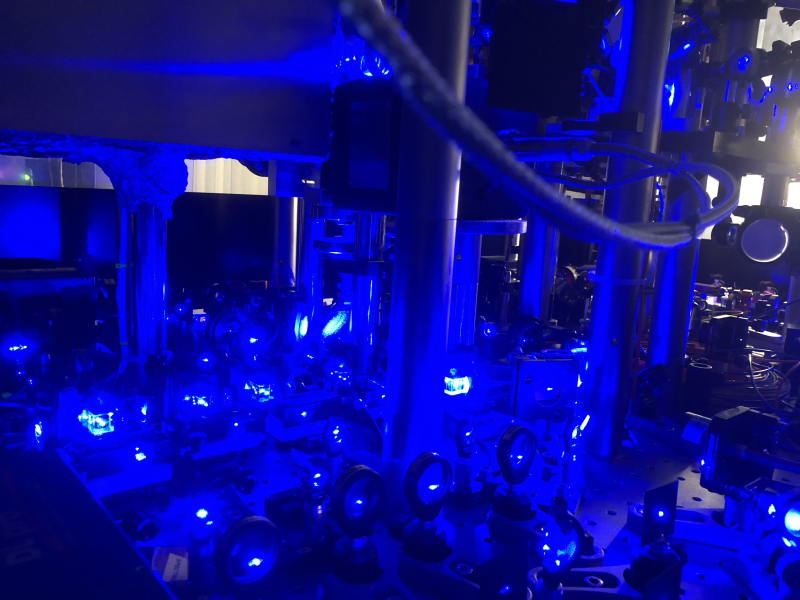
Under controlled conditions, the collective emission of light by an ensemble of emitters leads to intriguing effects, such as the spontaneous emergence of entanglement and altered emission properties. We will make use of the collective spontaneous emission phenomenon called super-radiance, with thousands of atoms inside an optical cavity, to create a source of light with ultrastable frequency and a linewidth even below that of individual emitters, a superradiant laser. This novel source of coherent light is of particular interest for frequency metrology, as it may be used as optical clocks with improved robustness to perturbations, and possibly reduced experimental complexity.
A challenge for present-day super-radiant lasers is maintaining the emission continuously. The ambition of our project is to breach this milestone by continuously refilling the optical cavity with strontium atoms that were pre-excited on the intercombination transition. By using a simple thermal beam, we aim at establishing continuous operation in a relatively simple and robust design.
Collaborations
- Igor Ferrier-Barbut, Laboratoire Charles Fabry de l’Institut d’Optique
- Marion Delehaye, FEMTO-ST
- Julian Robinson-Tait, University of Copenhaguen, Niels Bohr Institute
Project publications
We investigate the intensity stability of a superradiant laser in the configuration where a continuous beam of atoms in an electronically excited state crosses the mode of a high-finesse Fabry-Perot cavity. We show that such superradiant laser can become unstable and develop chaotic behavior.
arXiv:2606.21675 (2026)
We propose a minimalistic model to account for the main properties of a continuous superradiant laser, in which a beam of atoms crosses the mode of a high-finesse Fabry-Perot cavity, and collectively emits light into the cavity mode.
arXiv:2210.05464 (2022) / SciPost Phys. Core 6, 015 (2023)
Project News
New arrival: Cristian Serna
Welcome to Cristian Serna, who just started is PhD on the superradiant laser!
New arrival: Cristian Serna
A new team member arrived: welcome to Cristian Serna, who is starting his M2 internship with the superradiant lab team.
QuRIOUS doctoral network
We celebrate the success of the Qurious doctoral training network: we now have partners all across Europe, with whom to develop a new generation of atomic clocks and train 15 PhDs. More informations on the network at https://www.quriousclocks.eu/ and on thesis opportunity in our group here.
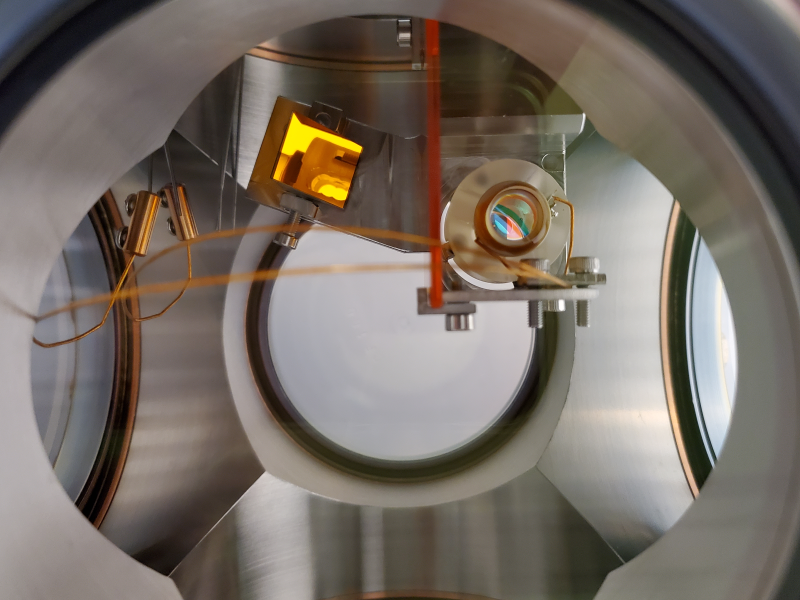
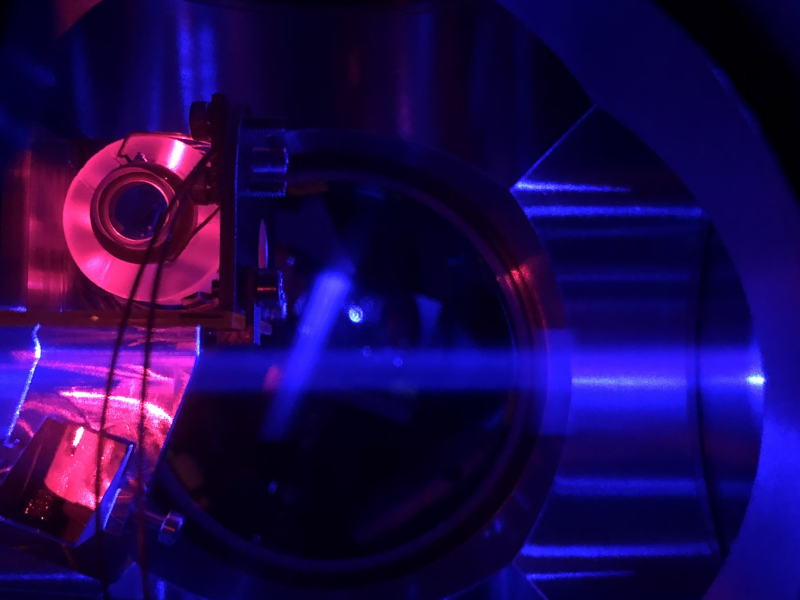
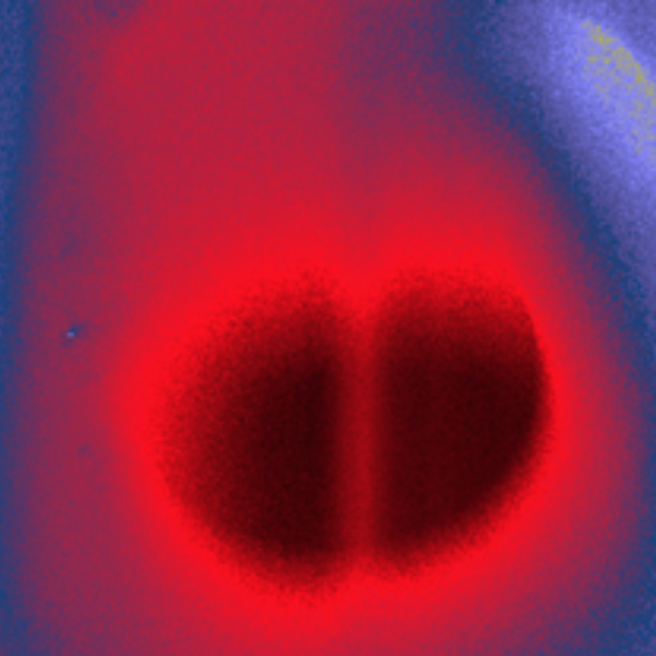
The atomic beam crosses the cavity mode.
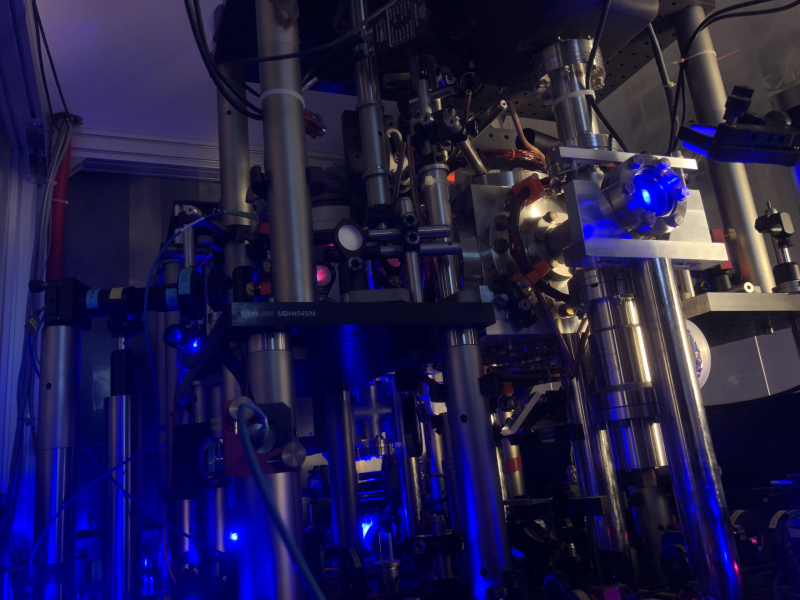
The preparation of the atoms in the excited state, before they enter the cavity, seems to work. Efforts are under way to laser-cool further the atomic velocity distribution, in directions transverse to the atomic beam flow.
New arrival: Zeyuan Zhang
New arrival: Yannis Pargoire
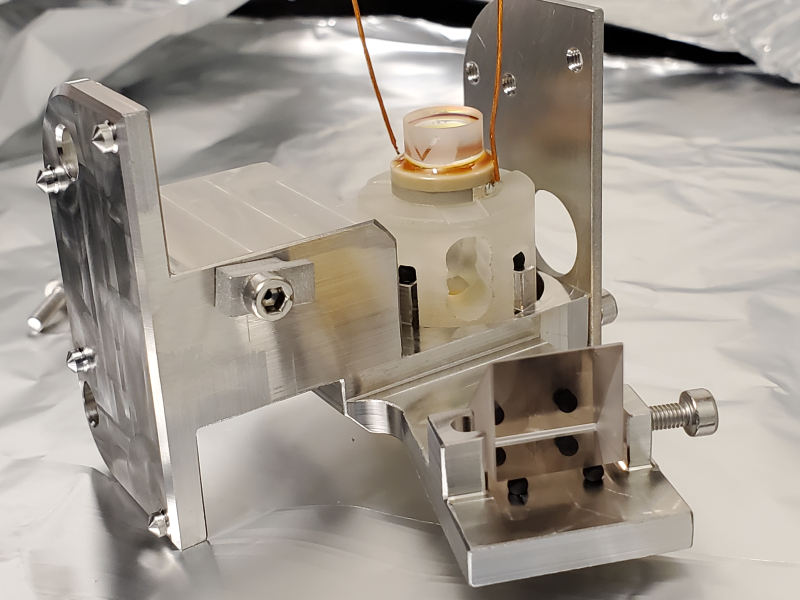
Cavity is ready for vacuum
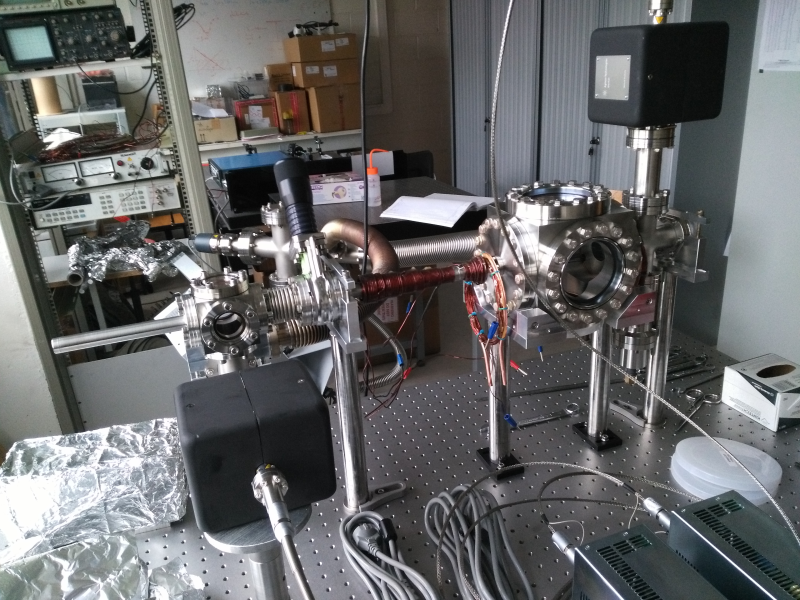
Atoms have been seen in the main chamber, within the internship work of Arthur Ilman. The optical cavity of the superradiant laser is ready to be installed in vacuum.
Vacuum chamber assembly
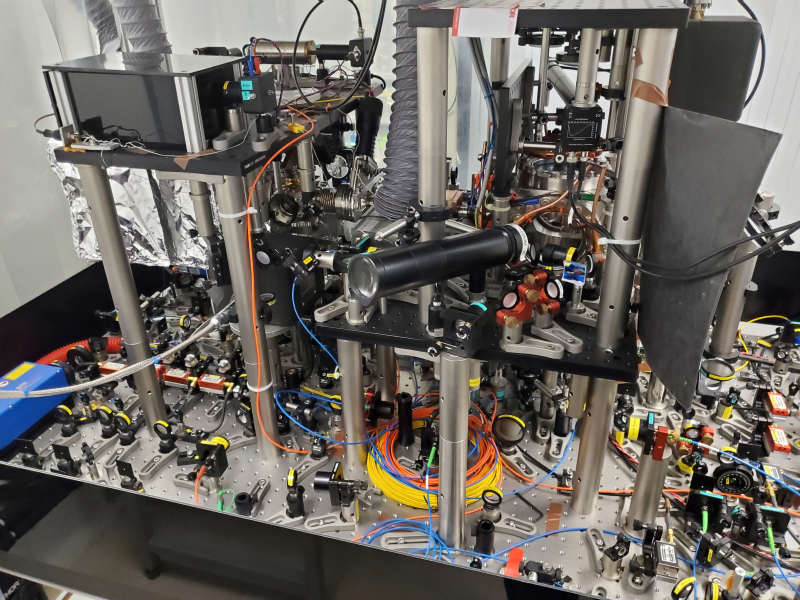
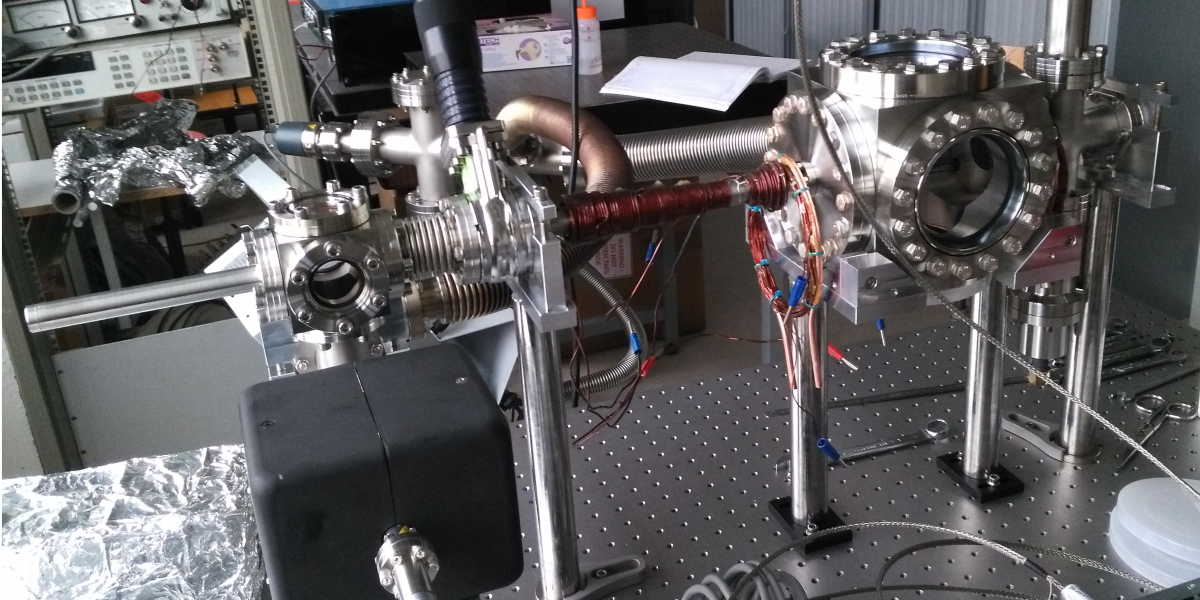
The superradiant laser optical cavity spacer has been made and polished by the laboratory optician Thierry Billeton. Furthermore, the vacuum system is now assembled, but for the cavity.
New arrival: Ziyad Amodjee
Welcome to Ziyad Amodjee, the first post-doctoral researcher joining the superradiant laser experiment!
New arrival: Grégoire Coget
Welcome to Grégoire Coget, research engineer, taking on the challenge of the design and construction of this machine!
Funding agencies
ANR, DIM Sirteq, Labex FIRST-TF, European Council (Qurious MSCA doctoral training network).