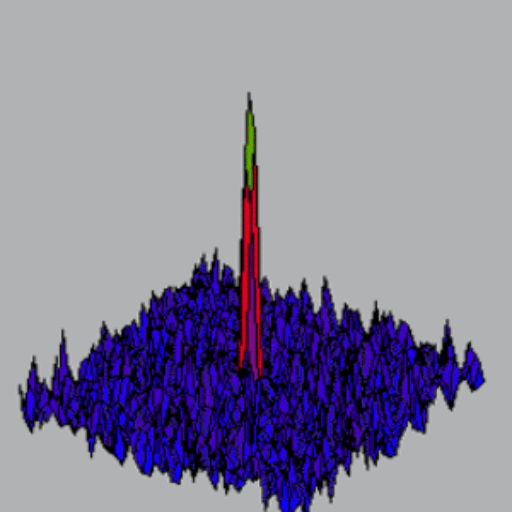

Seminar: LPL PHD student day, Villetaneuse
Excitations collectives dans un condensat de Bose-Einstein dipolaire
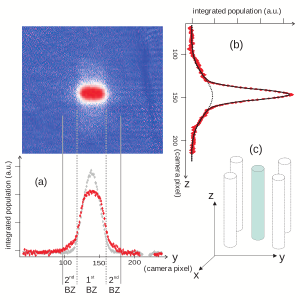
Spin relaxation and band excitation of a dipolar BEC in 2D optical lattices
We observe interband transitions mediated by dipole-dipole interactions for an array of 1D quantum gases of chromium atoms, trapped in a 2D optical lattice.
arXiv:1010.3241 (2010) / Phys. Rev. Lett. 106, 015301 (2011)
Seminar: Durham
Elastic and inelastic dipolar effects in chromium BECs
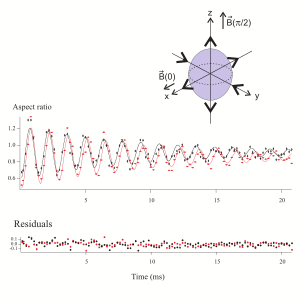
Collective excitations of a dipolar Bose-Einstein condensate
We have measured the effect of dipole-dipole interactions on the frequency of a collective mode of a Bose-Einstein condensate.
arXiv:1005.2493 (2010) / Phys. Rev. Lett. 105, 040404 (2010)
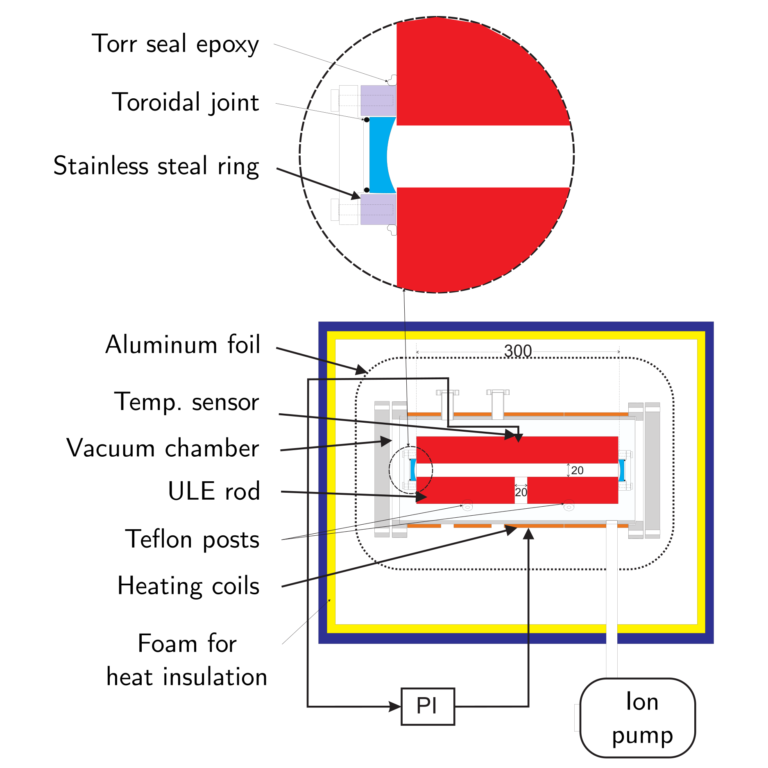
Optimized loading of an optical dipole trap for the production of chromium BECs
We report on a strategy to maximize the number of chromium atoms transferred from a magneto-optical trap into an optical trap through accumulation in metastable states via strong optical pumping.
arXiv:1004.3642 (2010) / Appl. Phys. B 102, 1 (2011)
Workshop: Nonlinear phenomena in quantum degenerate gases, Ourense
Elastic and inelastic dipolar effects in chromium BECs
Conference: Young Atom Opticians, Amsterdam
Collective excitations in a dipolar Bose-Einstein condensate
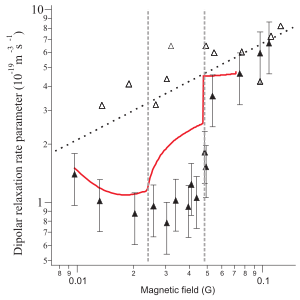
Control of dipolar relaxation in external fields
We study dipolar relaxation in both ultracold thermal and Bose-condensed Cr atom gases. We show three different ways to control dipolar relaxation, making use of either a static magnetic field, an oscillatory magnetic field, or an optical lattice to reduce the dimensionality of the gas from three-dimensional (3D) to two-dimensional (2D).
arXiv:1002.0222 (2010) / Phys. Rev. A 81, 042716 (2010)
Workshop: IFRAF review meeting, Paris
Elastic and inelastic dipolar effects in chromium Bose-Einstein condensates